Free shipping on all orders above ₹499.



Ayurvedic Fairness Cream Ingredients for a Naturally Radiant Look
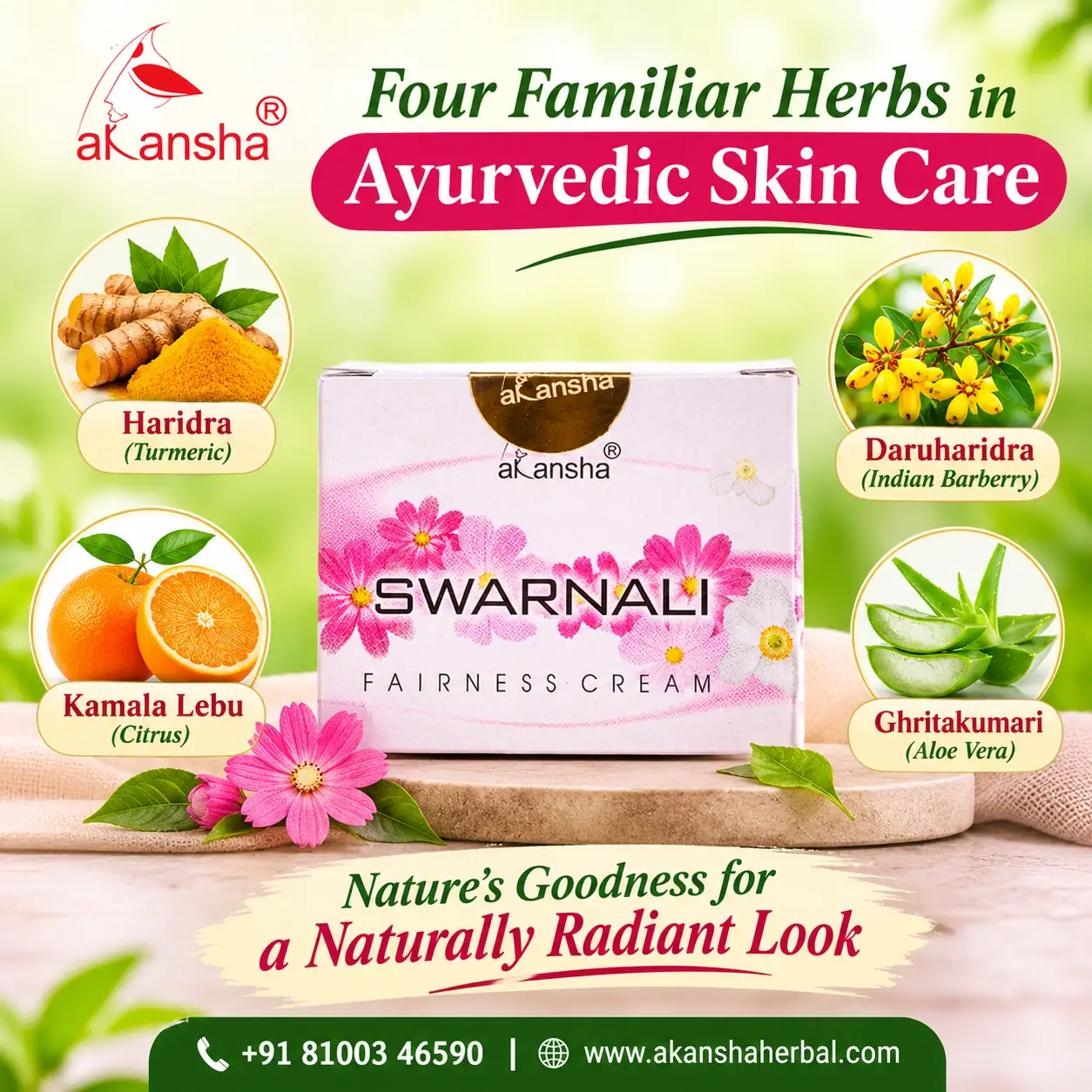
You turn a jar of Ayurvedic fairness cream towards the window and tilt it until you can read the small print. On the list at the backside of the fairness cream, there is a list of ingredients, among which you recognise aloe vera straight away, but two of the other names look so alike that you hold your place with a fingernail. One of them turns out to be haldi, a word you’d have recognised from halfway across the room.
Why are Ayurvedic ingredients traditionally used for complexion care?
In Ayurveda, the traditional Indian system of medicine, certain plants were valued for the lustre they were thought to bring to the skin. People used them in beauty preparations when they wanted their skin to look brighter or their complexion to appear fairer. That association helps explain why a familiar kitchen ingredient such as haldi also has a place on the dressing table.
You might remember a haldi ceremony by the shallow bowl of yellow paste passed from hand to hand, or by the aunt who tucked her sari pallu out of reach before taking her turn. Part of the appeal of an Ayurvedic cream for a radiant complexion is that a little of that familiarity comes with it. Even if the name on the jar takes a moment to decipher, you already know something about the plant.
For more insights into traditional herbal skin care, read Natural Ways to Maintain a Fresh and Balanced Complexion.
Which ingredients should I look for in an Ayurvedic fairness cream?
Among the ingredients in Akansha’s Swarnali fairness cream are Haridra (Curcuma longa), Daruharidra (Berberis aristata), Kamala Lebu (Citrus aurantium) and Ghritakumari (Aloe vera). The first two are easy to mix up, even if you know your way around an ingredient label. Their botanical names make the difference easier to see.
| Ingredient | Botanical name | A familiar name or description |
| Haridra | Curcuma longa | Haldi or turmeric |
| Daruharidra | Berberis aristata | Indian barberry |
| Kamala Lebu | Citrus aurantium | The citrus ingredient |
| Ghritakumari | Aloe vera | Aloe vera |
Haridra is turmeric, while Daruharidra is a shrub called Indian barberry. If you picture a piece of fresh haldi snapped in half, with that deep yellow centre that stains your thumb, you’re picturing Haridra. Daruharidra has nearly the whole word tucked into its name, which is probably why it’s so tempting to read the two as varieties of turmeric.
Kamala Lebu may be the easiest entry for a Bengali speaker to pick out. If you grew up asking for kamala lebu at the fruit stall, it’s the everyday name that catches your eye. For someone reading the same list in another language, Citrus offers a way in.
With Ghritakumari, the botanical name is the one you’re more likely to have heard in conversation. You might even have an aloe vera plant on your balcony, with one heavy leaf leaning over the rim of its pot. Once you’ve put that plant and the word Ghritakumari together, the longer name is easier to remember.
Can an Ayurvedic fairness cream remove pimples and dark spots?
The claim about removing pimples and dark spots comes from traditional Ayurvedic skin care. Herbal preparations were used for blemishes, including blackheads, as well as for the overall appearance of the complexion. A mention of dark spots tells you which concern people traditionally hoped to address.
You might choose an Ayurvedic complexion cream because you already know haldi from the paste used at family weddings. In Ayurvedic skin care, people traditionally used herbs in preparations for a brighter complexion and to care for skin with pimple marks.
How do I use Swarnali fairness cream in my daily routine?
Akansha’s directions for Swarnali fairness cream are to wash your face, then take the amount you need and apply it gently to the part you want. Start with the face wash you already make time for, and check the directions on your own pack if you’d like more detail about application.
Where you put an Ayurvedic fairness face cream can make a difference to how easily you remember it. If you usually take off your earrings at the dressing table after washing up for the evening, the space beside the little dish might suit you. The next time you put down an earring back, the jar will be there to hand.
A familiar place on your dressing table
There’s a small pleasure in coming across a name like Ghritakumari and realising you’ve been watering one on your balcony all along. If you’d like that familiarity in your own skin care routine, take a closer look at Akansha’s Swarnali fairness cream.