Free shipping on all orders above ₹499.


Ayurvedic Ingredients That Naturally Reduce Hair Fall Fast
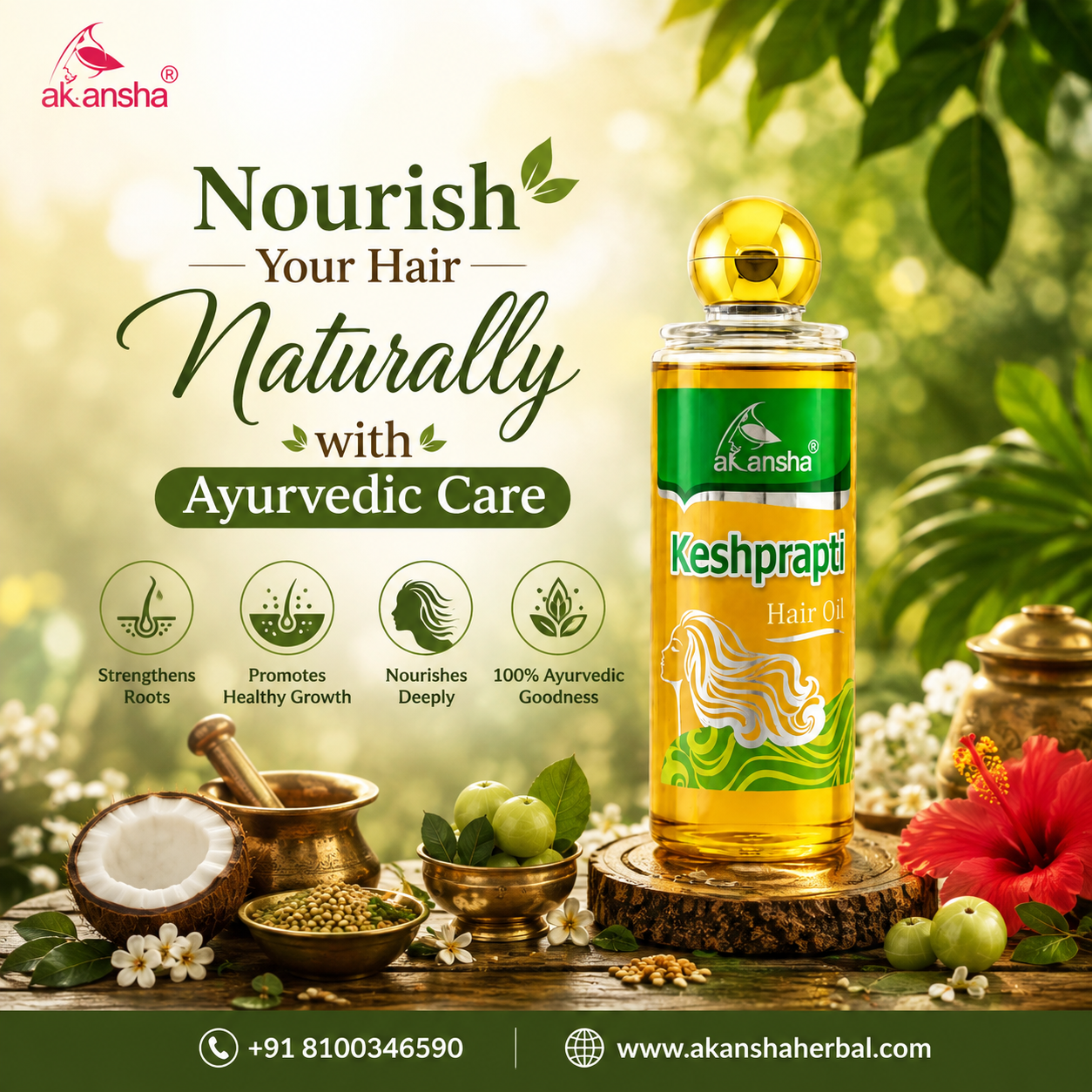
Hair loss and thinning are typical in today’s hectic life, whether it’s due to traffic jams, office work, or attending numerous weddings. Most of us attempt short-term remedies like applying expensive oils, taking vitamin tablets, or trying new shampoos. However, since we are simply addressing the symptoms rather than the underlying reason, treatments frequently fail. Healthy hair is a reflection of your inner balance and general well-being, not just what you put on your head.
Ayurveda provides a long-term, natural remedy. It’s a whole way of living that keeps your body and mind in harmony, not just oils and herbs. Taking care of your body, nutrition, mind, and scalp all at once, rather than relying solely on one product, is the key to having healthy hair.
Diet (what you eat), Herbs (what you apply), and Care (your routine and habits), like applying Keshprapti hair oil on the scalp, are the three key areas where the secret lies. Let’s see how to take care of your hair using ancient Ayurvedic methods that are appropriate for Indian weather and lifestyles. You will discover how to get stronger, thicker, and healthier hair naturally.
Internal Nourishment: Dietary Guidelines for Hair Development
According to Ayurveda, Asthi Dhatu, or bone tissue, is the source of hair. Your hair will exhibit the earliest symptoms of weakening if your body is not receiving enough nutrition. For this reason, eating well is the first step toward having good hair.
Pitta Dosha’s Impact on Hair
High Pitta Dosha, or your body’s fire and water balance, is frequently associated with hair issues. Pitta regulates metabolism, digestion, and the body’s conversion of food into energy. Stress, spicy food, heat, and sun exposure can all raise Pitta, which can harm hair roots and cause early graying, thinning, and hair loss.
Eat foods that chill the body and nourish the blood to balance the health of your hair from the inside out. This entails consuming more astringent, bitter, and sweet foods. Steer clear of very salty, sour, or spicy foods, as these might raise Pitta and exacerbate hair loss. Your Pitta may be elevated if you also have skin issues, acidity, or irritation.
Common Indian Foods for Strong Hair
The best thing about the Ayurvedic diet is that you already have the most beneficial foods in your home. Use our conventional essentials carefully; you don’t need anything foreign or strange.
Sneha, or healthy fats, are necessary. Desi Ghee, particularly from A2 cow milk, balances the body’s heat and dryness while nourishing hair roots. It might be quite beneficial to add just one teaspoon every day to roti or dal. Hair is naturally strengthened by the protein and minerals found in nuts and seeds, including almonds, walnuts, and sesame seeds (Til).
Use pulses like Moong Dal, which are easy to digest and balance all body types, for iron and protein. Simple Khichdi cooked with Moong Dal is nourishing, light, and healthful. Additionally, curry leaves (Kadi Patta) are great since they stop hair loss and graying. They can be tempered in curries or used in your morning smoothie.
Regularly eating these foods, both as ingredients and as natural remedies, provides your hair with the building blocks it needs to develop robust, healthy hair.
Topical Power: Herbs that Promote Hair Development
The first step is to eat healthily, but applying some herbs to the hair can provide additional nutrition. These herbs immediately nourish the hair roots, enhance blood flow, and cool the scalp.
Bhringraj: Known as the “King of Hair,” Bhringraj reduces hair root issues by cooling the scalp and purifying blood. Additionally, it might prolong the phase of hair growth, resulting in longer and thicker hair.
Amla: Amla has a lot of antioxidants and vitamin C. It keeps roots strong, strengthens hair, and stops breakage.
The finest benefits come from using a combination of Bhringraj and Amla, either as an oil or a hair pack: Amla strengthens hair while Bhringraj promotes growth.
Brahmi: Brahmi has been traditionally used to stimulate and calm the scalp, thus improving the overall condition of the hair. The antioxidant ingredients present in the herb can protect hair and the scalp from the effects of oxidative stress.
Methi: It is rich in nicotinic acid and protein, both of which are necessary for hair growth, particularly in cases of hormonal hair loss such as those that occur after menopause or pregnancy. Methi seeds can be soaked overnight, ground into a paste, and used as a mask or combined with Amla to make a more potent hair pack.
Hair health is also enhanced by following a daily healthy routine, from eating to sleeping, and using Ayurvedic solutions, such as purchasing products from an herbal shop online run by Akansha Herbal. By adopting these practices, hair care becomes a natural and therapeutic aspect of life rather than a chore.
Advice from Ayurvedic Professionals
Seasonal Care: As the seasons change, so do the needs for hair. Use cooling oils, such as coconut or Bhringraj, in the summer or fall. Heavy oils, such as sesame or almonds, help avoid frizz and dryness in the winter and early spring.
Common Advice:
Check Your Nails: Weak hair roots may be visible in brittle or pale nails.
Morning Addition: For protein and fiber, soak a spoonful of methi seeds overnight and consume them first thing in the morning.
Healthy Scalp: Your scalp shouldn’t feel overly dry or greasy, but rather somewhat moist.
Conclusion
Ayurvedic hair care focuses on lifestyle rather than quick fixes. Long-term strong hair comes from fueling your body, balancing your doshas, and soothing your mind. You can gradually and naturally improve your general health and grow your hair by adopting healthy eating habits and applying Keshprapti hair oil from Akansha Herbal on a daily basis.